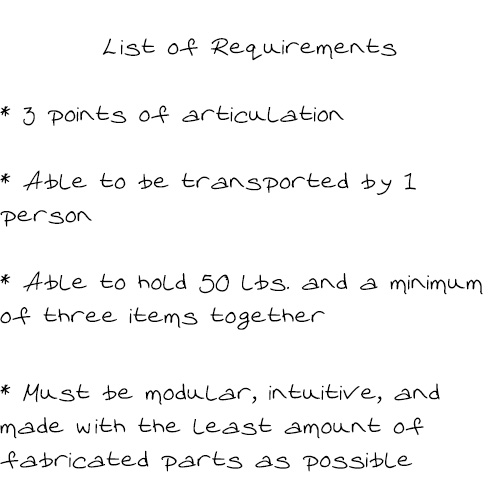
List of parameters

Dealing with parameters
Sounds easy enough

For our senior mechanical engineering design project, we were assigned to make a universal welding fixture that satisfied the requirements listed to the left. Initially, I was a little upset in the fact that it seemed so simple. I thought "Surely we'll finish this in a week and then I'll be done for the semester." Soon enough I found out that this was more of an exercise in "less is more" and that the simpler the design, the better off you will be.
Beginning thoughts and brainstorming
Starting big, thinking too complex

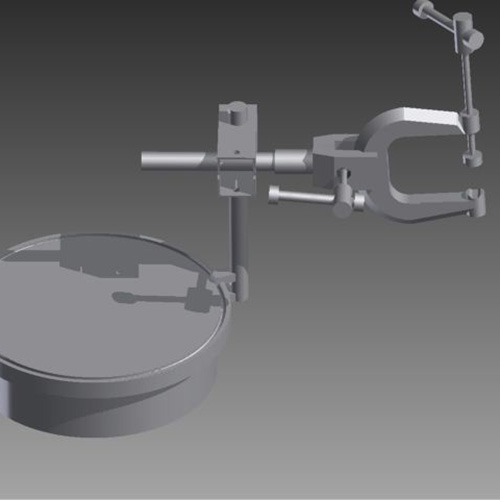
We went through many, many, many iterations on the way to the final design. My first idea, pictured to the right, seemed feasible. It utilized a metal base with a rail system allowing the swing arm a full 360 degrees of rotation. It satisfied all the requirements except the massive amount of fabrication involved to create the track. This would have required extensive CNC milling and I still wasn't sure how well the vertical arm would lock into place. This design, along with four others were eventually scrapped.

The first iteration of the welding fixture

Assembly of all the parts

A new appreciation for design

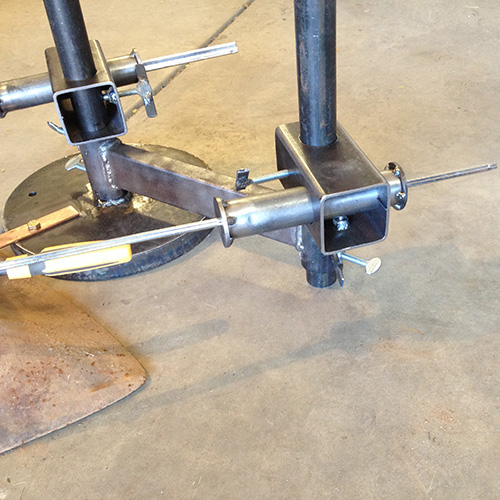
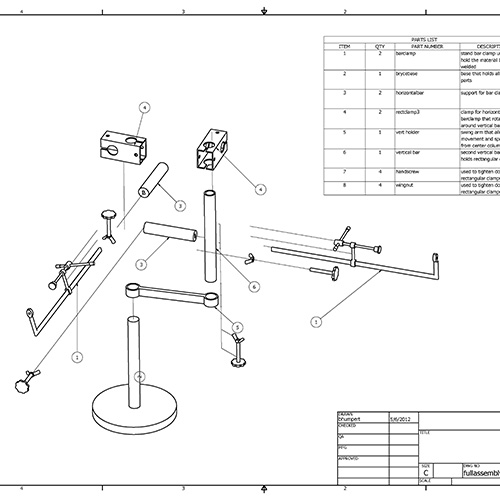
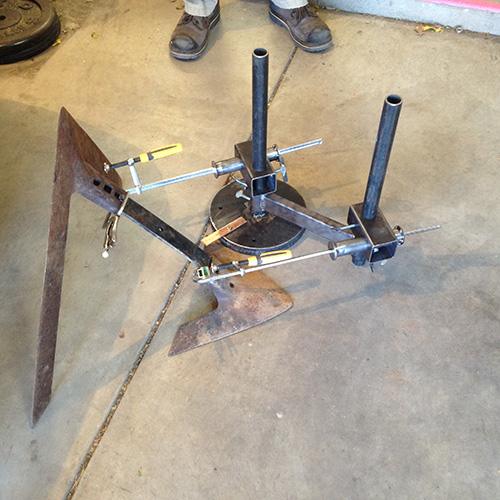
The final design implemented a base with a vertical bar welded to the center of it. This allowed two vertical bars to be used along with the rectangular clamps that would hold the bar clamps in place. The largest share of fabrication was done on the rectangular clamps and was completed using an end mill. A more robust and technical summary can be found from a final report done on the project.

Design Final Report


Finalized design

With the design finalized, we factored in tolerances depending on things like interference fits among other things. I created a 3D model by exporting all of the created parts made in Autodesk Inventor into 3DS Max which can be seen to the right.

Animated model of the project created using AutoCAD Inventor and
3DS Max (Click/tap on the image to view the video for mobile users)


Final product
fixture holding multiple pieces to be welded together

It works!

After a long year of tracking parts down, re-design after re-design, and manufacturing the pieces it was time to find out if it would work. We picked out many irregular shapes and sizes of metals to give it a run through and it surpassed all expectations. The purpose of this was to allow a one man operation to tac components together that would normally require two or more people. The final weight came in right under 40 lbs in a robust package that felt nearly indestructable. The welding fixture is still in use in the engineering shop at Texas Tech University.

This project was eye opening in many ways. The biggest lesson learned was that, no matter how simple the project, it is inevitable that problems will arise and certain aspects will have to be revised. It also showed the immense amount of time that is required in the initial design of a product as well as teaching me how to mesh well with other team members. I have a new respect for people in all manufacturing disciplines and I see that just because something looks good on paper, does not mean that it will be practical.